
Custom software development typically costs between €5,000 and well over €100,000 in 2026, depending on complexity, integrations (APIs, ERP, CRM), use of artificial intelligence, and scalability requirements. These figures reflect real custom software pricing bands when the goal is to solve a concrete business problem—not a generic sticker price.
This article shares honest custom software price ranges, three company-level development examples, and a practical checklist to estimate your bespoke software budget before you request a proposal. If you are comparing custom app costs or software development prices in Spain with buying intent, use this as your map.
Custom software pricing (real ranges)
These figures are indicative estimates based on typical SME and mid-market projects; enterprise software development costs vary with every brief. They help set expectations before a commercial conversation—they do not replace a fixed quote.
| Project type | Estimated price |
|---|---|
| Basic MVP (validation, reduced functional core) | €5,000 – €15,000 |
| Mid-size software (multiple modules, roles, reporting) | €15,000 – €50,000 |
| Complex platform (multi-tenant, deep integrations, high performance) | €50,000 – €150,000+ |
The same “custom software” label can mean anything from an internal workflow to a SaaS product. That is why your bespoke software budget must tie to scope, risk, and expected value—not headline rates alone.
If you are weighing custom app cost against packaged tools, these pages connect pricing to your operating context: Software a medida: cuándo merece la pena desarrollar una solución personalizada, ERP vs custom software, what software is and which types exist.

What drives the price
Whenever teams ask how much custom software development costs, these levers explain the quote. At Efiprox we align them during discovery so pricing reflects real effort and future maintenance.
Functional complexity and business logic
More business rules, cross-validation, role permissions, and process states mean more analysis, testing, and release work. That is how a simple catalogue differs from an approvals engine or dynamic pricing.
Integrations (APIs, ERP, CRM)
Connecting to SAP, Holded, Salesforce, or home-grown CRMs means data mapping, network failure handling, idempotency, and sometimes light ETL. Each integration adds expert time—one reason enterprise software development cost is not linear.
Use of artificial intelligence
AI applied to operations (classification, data extraction, internal copilots, scoring) can reduce manual work but needs quality data, evaluation, and governance. Predictive models or RAG over internal docs widen scope and testing. how to implement AI in a company · AI vs automation.

Design and user experience
Long forms, signatures, executive dashboards, or multi-device flows increase UI/UX design, accessibility, and pilot iterations. Strong UX shows up in adoption and fewer operational incidents.
Scalability and architecture
Usage spikes, real-time geo, or heavy reporting force architectural choices (queues, cache, observability). Investing here avoids rewrites as you grow—it is part of total cost of ownership, not only day-one price.

Real-world price examples (indicative)
Three patterns we often see when a company evaluates custom app pricing or an internal platform. The ranges link back to the table above and help internal ROI conversations.
Internal process automation
Indicative price: €12,000 – €25,000
Problem: approvals trapped in email and Excel, duplicated data across departments, weak traceability.
Typical impact: fewer admin hours, fewer errors, measurable cycle times; fits phased automation programmes.
Evolving B2B SaaS platform
Indicative price: €30,000 – €80,000
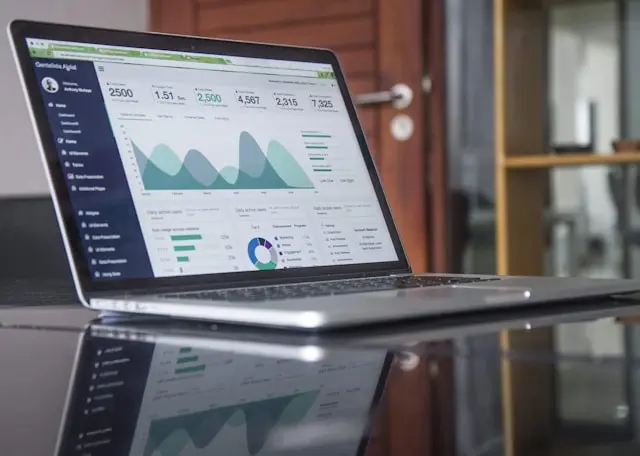
Problem: subscription model, customer onboarding, billing, and usage dashboards need a stable, extensible product.
Impact: recurring revenue when go-to-market matches; budget rises with multi-tenancy, fine-grained roles, and product metrics.
Software with embedded AI
Indicative price: €40,000 – €120,000
Problem: large volumes of text or documents handled today by specialists; you want model-assisted work without losing control.
Impact: throughput per person, less rework, and a base to improve the model with internal feedback—cost includes governance and testing.

Why is the price gap so wide?
This is not shelf software: every company has different rules, data, and digital maturity. The same module rarely fits without adaptation—that gap drives how much custom software development costs.
Choosing on headline price alone often becomes expensive mid-term: technical debt, brittle integrations, and missing observability inflate maintenance. Development quality and process (discovery, QA, security) turn spend into an asset.
Key takeaway: balance price, risk, and speed. A transparent technical partner on assumptions and costs prevents surprises in total enterprise software spend.
How to estimate your software budget
Run through this checklist before you ask for a proposal or audit—it aligns stakeholders and sharpens priorities.
- Concurrent users and roles (internal, partners, customers).
- Processes to automate and systems you replace (especially Excel or email).
- Required integrations (public APIs, ERP, CRM, payment gateway).
- Depth of rules, reporting, and permissions.
- AI needs (assistance, extraction, prediction) and data quality available.
What would your project cost?
Every initiative differs: scope, regulatory risk, and timeline expectations move bespoke software pricing more than a generic feature list.
We can return a realistic estimate within one business day after first contact and, if it fits, go deeper with a free feasibility-and-ROI-oriented audit.
Share user volumes, current systems, and the business outcome you want—we usually reply with a range and the assumptions behind it.
When is custom software worth it?
It pays off when the cost of inaction (time, errors, missed opportunity) sustainably exceeds product investment. Typical signals:
- Repetitive manual processes that no longer scale.
- Heavy reliance on Excel as the “system of record” without traceability.
- Generic SaaS tools that cannot fit your operating model.
- Limited scalability or bottlenecks at peak demand.
- Need for operational differentiation or sector-specific compliance.
Decision stage
Move forward with a concrete plan
If the problem is clear and you want execution, we propose a measurable next step: audit, scope, or proposal.
Frequently asked questions
How long does software development take?
An MVP may take weeks or a few months; larger solutions often ship in phased releases over two to six months or more. Timelines depend on agreed scope, integrations, and your team’s availability to validate.
Is SaaS or custom software better?
Choose SaaS when the process is standard and recurring licence cost is acceptable; choose custom when differentiation, deep integrations, or compliance demand it. Often hybrid: SaaS for commodity layers and custom where you compete.
Can we start with a small budget?
Yes—phase delivery, prioritise the core that saves cost or drives revenue, and defer nice-to-have items. Avoid cutting security or foundational architecture in ways that cost more later.
What about maintenance?
Hosting, dependency updates, support, and functional evolution. Many teams plan annual spend as a fraction of initial build depending on SLA and criticality—we specify this in proposals.