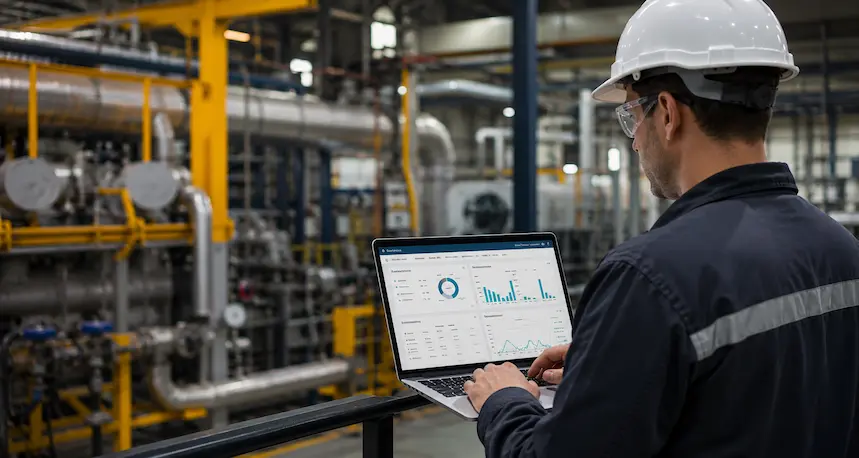
You know that Friday-afternoon vibe on the shop floor—the line is unhappy, nobody can locate the spare, and nobody agrees on the last technician note—except WhatsApp remembers something different. Plenty of factories still duct-tape workflows with trusty spreadsheets, paper tucked on the machines, frantic phone taps, and email chains that magically lose attachments. Nobody is lazy; brittle systems reliably generate costly mistakes once delays hit production commitments or customer promises.
That is exactly where industrial maintenance software earns its paycheck: work orders live next to asset history and incidents live next to preventive schedules. Technicians execute with clearer priorities and stock visibility, manuals stop floating on random drives, and leadership finally audits par stops with receipts instead of campfire stories.
This article walks operators and leaders through the real-life business case—including what CMMS-class tooling should cover day to day—plus how Hispadrive ID fits when fabrication, logistics, installs, inventory, and maintenance must share one operational map.
What is industrial maintenance software?
In one blunt sentence it is where you quit improvising repairs with folklore. Think of a central board that keeps machine lineage, repeatable routines, who executed what and when—not just a prettier Excel tab.
For asset-heavy operators the tool connects installations, crews, stores, and QA notes in the same storyline. Starting small counts: even consolidating corrective orders with disciplined notes delivers traceability. The payoff accelerates once calendars, checklists and counter-based routines feed the same system instead of spreadsheets living on five laptops.
- Asset-linked work orders so failures become searchable history—not whisper networks.
- Incident management with priorities and owners everyone can trust mid-shift.
- Preventive planning anchored to calendars or usage counters whenever the maturity is ready.
- Industrial stock traceability, documentation anchors, audit trails without drowning in paperwork theatre.
"Efficiency" feels corporate until it turns into tangible MTTR reductions, reclaimed production hours and calmer supervisors who finally see wrench time vs waiting time—not vibes.
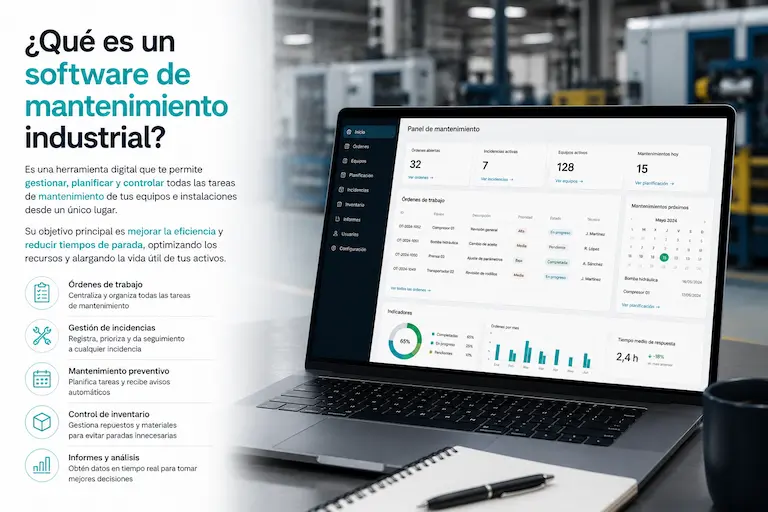
What is maintenance management software actually for?
If you steward operations, isolate marketing fluff from what saves minutes on grease-stained tablets. Five practical buckets:
Control preventive schedules without hero memory
Alerts and reusable job plans keep recurring checks executable—oil routes, filtration swaps, inspections tied to OEM intervals. Good software shows compliance gaps instead of politely hiding them inside binders nobody opens.
Run breakdowns like trackable incidents, not campfire tales
So much wrench time disappears before tooling ever enters the conversation: blurry photos scattered across chats, tickets missing context, rework because second shift guesses what first shift patched. Incident threads anchored to machines stop duplicate scrambling when customers demand answers.
Centralize history photos manuals next to assets
Partial information repeats stops, wastes parts and magnifies variability when rotations change. Structured history—with photos where they matter—makes tacit craftsman knowledge transferable instead of hostage to three veterans.
Shrink downtime—not drama, throughput
Downtime is expensive because value stops accruing immediately. Reliable software trims round trips among stores procurement and crews, aligns urgent queues and—if measured honestly—shows MTTR objectively before anyone funds another IoT brochure.
Raise technician productivity—not admin homework
Adoption hinges on shaving friction: fast mobile captures, pragmatic templates barcode-friendly stores flows that refuse double typing later. Nobody adopts paperless philosophy; they adopt systems that shorten the path from failure to solved.
Most common pains when CMMS tooling is absent
Readers usually nod halfway through bullet one—not because teams are bad but because the supporting system fractures under load:
- Distributed truth: mismatched spreadsheets, voicemail archaeology, handwritten shift notes photocopied oddly.
- Manual labeling mistakes on spares costing hours when urgent jobs collide with sloppy locations.
- Preventives perpetually bumped until the predictable emergency validates why they existed.
- Missing traceability for audits regulators or picky clients demanding receipts not vibes.
- Hidden downtime while everyone waits unclear next steps photos stuck on personal phones upstairs still guessing.
- Stock blindness because stores and mechanics translate part numbers dialects warehouse speak vs plant slang.
- Executive exhaustion because variance lives as anecdotes—not reproducible KPIs.
These stack into cash burned late shipments fatigue good people quitting mentally while saying we manage. Digitizing industrial maintenance installs an information backbone large enough for today and tomorrow—not another fragile spreadsheet annex per new production line.
Types of industrial maintenance (and why semantics matter)
Shared vocabulary aligns purchasing conversations with search intents—especially around corrective preventive predictive maintenance jargon used by serious buyers—not conference buzzwords:
Corrective maintenance
Fix what already failed. Tooling must make openings assignments photos closures dead simple with minimal-but-useful causal notes. Patterns of repeat corrective work shout that preventive tactics or upstream design debts need scrutiny.
Preventive maintenance
Schedule by elapsed time accumulated runtime or OEM guidance. Evidence matters without evidence preventive plans remain wishlists. Strong programs graduate into runtime counters aligning spend with genuine usage.
Predictive maintenance Industry 4.0 without miracles
Predictive can mean fancy sensors—or pragmatic first steps: PLC alarms historians temperatures vibration where instruments already exist. Without trustworthy field history flashy AI forecasts noise blend discipline signal first smart analytics amplify good habits later.
Why digitizing industrial maintenance compounds
Because these bullets map to Euros hours and reputations—not slide decks:
- Fewer surprise stops when preventive and stores finally speak politely.
- Strong control who did what spare consumed closure timestamps auditable timelines.
- Better backlog visibility replacing loudest voice triage rituals.
- Fewer human errors originating from nomenclature sprawl duplicated shadow systems.
- Leadership KPIs anchored to downtime minutes repeat offenders suppliers.
- Scalable operations new assets inherit processes not bespoke chaos.
Manual maintenance governance collapses exponentially as asset counts shift complexity and interruptions multiply mature software frees leaders to steer improvement cycles instead of re-litigating folklore nightly.
What strong industrial CMMS tooling should deliver
Judge platforms with hardened criteria—not three shiny UI screenshots:
- Operational dashboard backlog priorities states understandable at caffeine speed.
- Asset installation registry because orphaned work orders float uselessly.
- Preventive engine calendars counters templates ruthless about admin burden.
- Traceability causal notes spares downtime segments auditable storyline.
- Stores integration min-max alerts fewer emergencies born logistics confusion.
- Exportable reports leadership finance auditors deserve plain language summaries.
- Role-based permissions real security posture not everyone edits everything blindly.
- Field mobility tolerating flaky Wi-Fi greasy gloves reality factory floors.
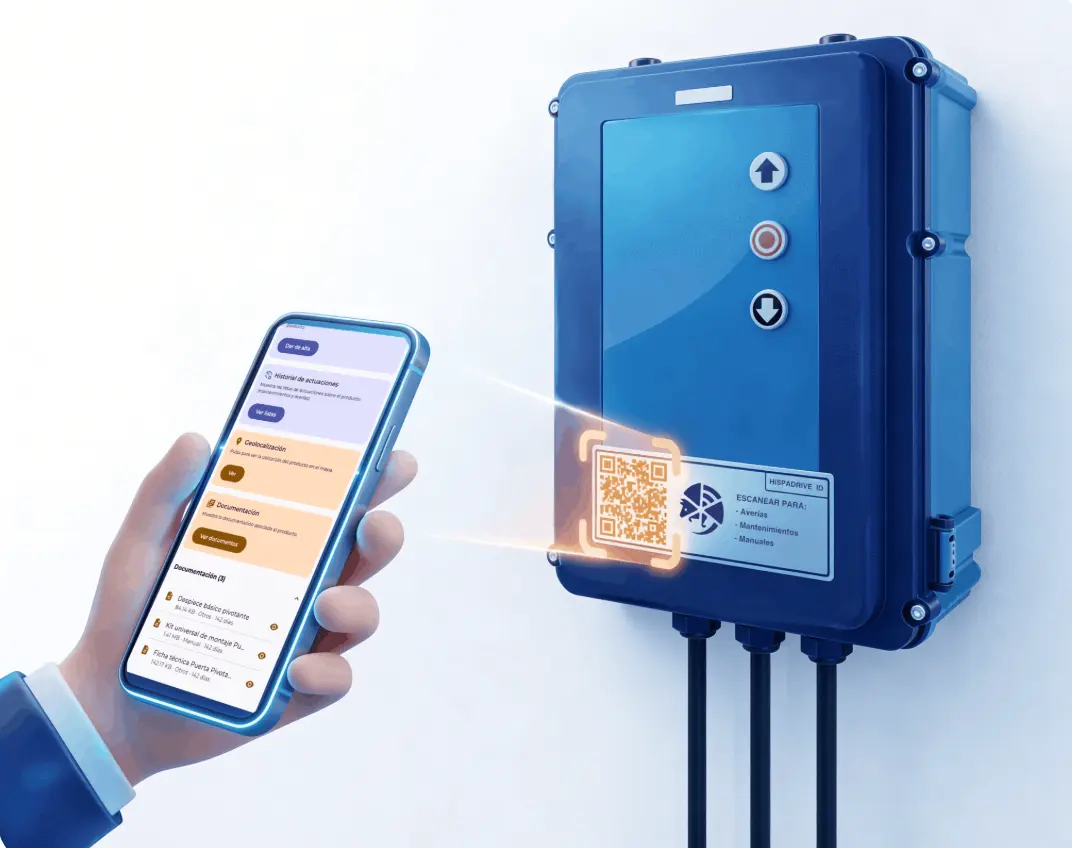
Hispadrive ID when fabrication installs maintenance and stock share destiny
Time for product honesty: no miracle pitch—just stubborn operational fragmentation we keep watching hurt otherwise excellent teams.
Hispadrive ID organizes manufacturing installations maintenance industrial stock deliberately—not generic ticketing duct-taped to assets as afterthought Physical reality SKU discipline geospatial context matter deeply here.
- Centralization fewer context switches spreadsheets calls scavenger hunts cohesive navigation.
- Traceable lifecycle ownership statuses kill ghost workloads quietly sinking morale.
- Operational visibility decisions align on shared incident load logistics signals.
- Organization discipline survives growth without relying lone hero overtime legends.
- Scalable backbone ready for expansions contractual complexity norm changes without ripping foundations every two quarters.
If truth remains scattered adoption fatigue compounds—software should buy calm clarity scalability fewer Friday panic loops If that resonates explore the product storyline next straightforward link below.
Mini case practical hours reclaimed when improvisation ends
Before
The pattern we see most often: incidents scattered across paper, email and chat groups; shifts that do not share the same work order version; preventive checks perpetually postponed because something «more urgent» always arrives; spare parts ordered twice or arriving late because warehouse codes do not match what the technician expected at the machine.
After
No instant miracle, but a solid process: the same information lives in one place; priorities are visible to shifts and purchasing; preventive work starts leaving evidence; history is searchable when «that same fault» returns; and stores make sense again because codes and locations align with what the shop floor expects. The team does not write more for bureaucracy—they write what is useful because each data point serves the next step.
Outcome
Combine discipline plus approachable tooling—you typically see repeating root causes diminish logistics thrash lessen leadership meetings reference numbers not only fatigue storytelling improvement cycles become plausible because history finally trustworthy.
Industry 4.0 industrial automation predictive maintenance human lens
Industry 4.0 on real floors blends existing PLC SCADA telemetry with pragmatic data hygiene—you rarely need mythical moonshots Day one win clean actionable history before financing another sensor pilot.
Applied AI earns keep classifying anomalies surfacing backlog risk ranking—but only atop trustworthy disciplined inputs otherwise models amplify entropy beautifully.
Automation excels rules-based repetition notifications replenishment triggers humans still adjudicate nuanced safety tradeoffs contextual judgement strong software absorbs administrative drag leaving humans sharper where it pays.
Supporting this pillar with adjacent services helps readers—and search clustering—automate contextual depth responsibly: AI vs automation, hidden costs of manual processes, Custom software development practice, how much custom software costs.
Does your organization need industrial maintenance software?
Plain signals—not buying excuses:
- Excel multiplication versions macros breaking Friday-night email attachments folklore.
- Urgent queue grows louder-not-smarter lacks shared procurement production alignment cockpit.
- Audits demand receipts team rebuilds timelines manually nights-before meetings.
- Operational growth outpaces coordinator headcount silently burning good people heroic overtime.
Digitizing maintenance is not collecting icons on desktop—it is earning control shedding repetitive errors scaling processes without multiplying chaos.
Consideration stage
Compare options and choose the next step with clarity
If you are already evaluating solutions, we can help you prioritize impact, timelines, and fit with your real processes.
Industrial maintenance software FAQ
What does industrial maintenance software do?
It aggregates assets installs work orders corrective preventive workflows spares docs incident trails into cohesive system replacing fragmented improvisation single source fosters coordination KPI-grade truth.
What is the difference between preventive and predictive maintenance?
Preventive schedules interventions by calendar or usage thresholds protecting reliability rhythm predictive monitors condition signals vibrations temperatures alarms anomaly trends intervene before catastrophic failure mature predictive relies disciplined historical adoption first preventive digital backbone typical prerequisite.
How do you digitize industrial maintenance?
Inventory critical assets design minimal workable incident preventive loop train adoption early clean nomenclature stock locations pilot disciplined zone leadership aligned metrics expansion follows culture not license shopping alone.
What advantages does maintenance software offer?
Less downtime sharper planning tighter stores coordination audit-ready narratives reduced heroic single points knowledge capture transferable across shifts vacations attrition healthier executive conversations anchored facts.
How much does industrial maintenance software cost?
Wide spectrum SaaS licensing modules implementation integrations sensors multi-site professional services plus internal adoption hours comparing sticker monthly fees alone misleads request scoped proposals assumptions pilot measurable KPIs beware marketing tables lacking owners deliverables.