Many companies start with a simple website because they need a fast, affordable online presence. That makes sense. The friction usually shows up when the business grows and the site can no longer keep up.
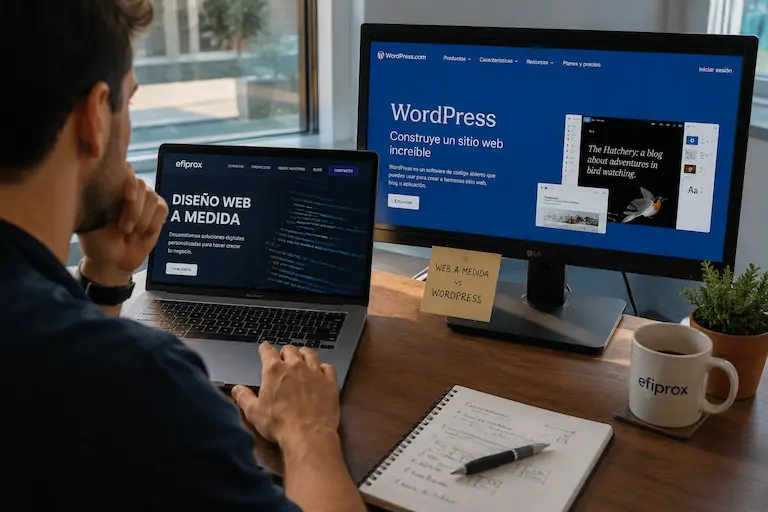
That is when the question we hear almost every week appears: stick with WordPress or plan custom web development? It is not a technology war. It is a business decision.
In this guide we cover the real differences between WordPress and a custom website, the pros and limits of each, and when each option makes sense —without trashing either side or selling hype.
What WordPress is and why so many companies use it
WordPress is a widely used CMS (content management system). It lets you publish pages, blog posts, images, and forms without building everything from scratch. That is why many SMBs choose it early on.
From a business perspective, it often delivers:
- speed to get the site live;
- flexibility through themes and plugins;
- ease for someone on the team to update copy or news;
- generally lower upfront cost than a custom build;
- a large community and documentation when something breaks.
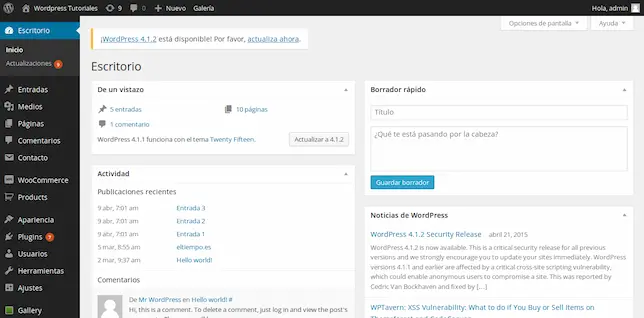
WordPress is not "bad." For many projects it is a perfectly valid solution.
What a custom website is
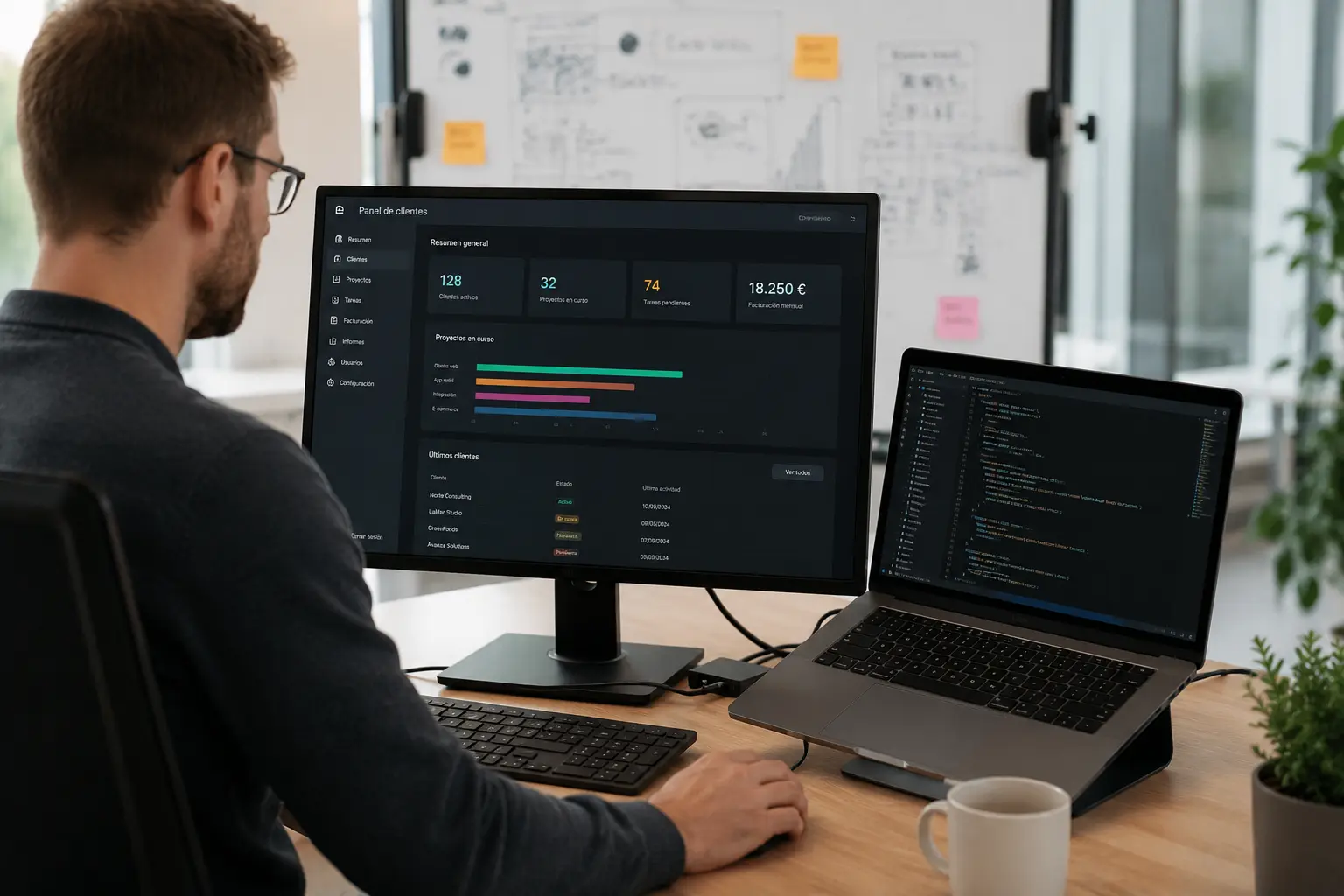
A custom website is built specifically around your company's processes, needs, users, integrations, and goals. It is not just "another design": it is a different way to think about the tool.
In practice it usually means:
- real customization of flows and screens;
- control over performance and architecture;
- scalability as the business grows;
- integrations with CRM, ERP, payment gateways, or internal tools;
- automation of tasks that are still done manually;
- more room for security and long-term maintenance.
The main difference is not only how the site looks, but how it fits how the company actually works.
Differences between WordPress and a custom website
This table summarizes what we get asked most in meetings. Neither column is "the winner" by default —it depends on what you need now and where you are heading.
| WordPress | Custom website |
|---|---|
| Faster to launch | More flexible long term |
| Lower upfront cost | Higher customization |
| Relies on plugins and themes | Features designed for the business |
| Great for simple projects | Scales with complex processes |
| Can limit you as you grow | Built to grow with operations |
The goal is not to pick the "most professional" option, but the one that fits your timing, budget, and real complexity.
When WordPress makes sense
Being clear here builds trust. WordPress fits well when:
- you need a simple corporate site or blog;
- the project is small and processes behind the site are straightforward;
- you want to validate online presence without heavy development yet;
- budget is tight and timelines are short;
- there are no demanding integrations or complex client areas.
If a company only needs basic online presence and no complex processes behind the site, WordPress can be a perfectly valid choice.
When a company starts to outgrow WordPress
The issue usually appears when the site must do more than originally planned. Common signs:
- too many plugins to cover needs that do not fit together;
- slowness on mobile or traffic spikes;
- ongoing maintenance from updates and conflicts;
- integrations with CRM, ERP, or internal tools getting fragile;
- limits on roles, permissions, or custom workflows;
- dependence on templates that do not match how you work;
- hard to scale without rebuilding large parts of the site.
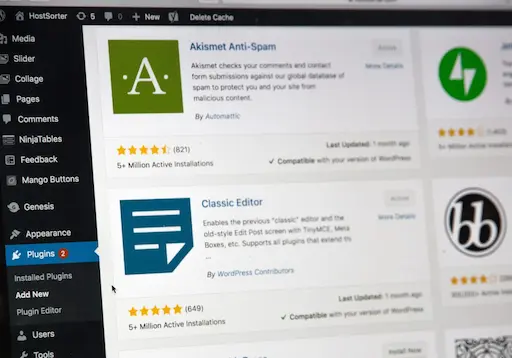
Often the problem does not show up in year one. It appears when the company grows and needs the site to do more than originally scoped.
The issue usually appears when the site must do more than planned —not because WordPress "failed," but because the project outgrew its initial scope.
Real advantages of a custom website
We are talking business, not frameworks. A well-planned custom site often brings:
- full fit with real processes and users;
- better performance without carrying unused features;
- more control over roadmap and priorities;
- clean integrations with tools you already use;
- automation of repetitive tasks from the site itself;
- scalability as orders, users, or data grow;
- security and maintenance aligned with business criticality.
A custom website is not just "having something different." It is building a tool aligned with how the company actually works.
The problem of building a company on patches
We see many companies start with a theme, add a plugin for forms, another for bookings, another for SEO, another for translations… After a while the site works, but nobody has a clear picture of how it all fits.
What looked fast and cheap at first can create more complexity, dependency, and long-term limits. You do not always need to rebuild everything —sometimes you need to stop and ask what the business really needs.
Some companies end up depending on ten different plugins for something that, done right, could be much simpler.
A real example: when companies move to a custom website
Picture a company that starts with a corporate WordPress site: services, contact, blog. It works. The team is happy.
Two years later they need:
- a client area with documents and statuses;
- automated alerts and sales follow-up;
- the site connected to CRM and billing;
- internal dashboards for different roles;
- bookings or requests with their own rules;
- reports today built manually across email and Excel.
The move to custom usually happens not because a company "wants something prettier," but because technology must support growth.
So… which option is better?
It depends on context. There is no one answer for every company.
WordPress often fits when you want:
- speed to market;
- simplicity for content and blog;
- contained upfront cost.
A custom website often fits when you want:
- growth with more complex processes;
- integrations and automation;
- control and long-term scalability;
- the site to stop being a brochure and become an operational tool.
The best option is not the most complex one. It is the one that truly fits your timing and needs.
How to know if your company needs a custom website
Go through these signs honestly. You do not need to tick them all:
- you use too many plugins for basic needs;
- the site cannot do something the business already needs;
- it is slow or breaks after updates;
- integrations with other tools are fragile or manual;
- you need to automate flows that still depend on people;
- business growth exceeds what the site can handle without patches.
When the site stops being only a brochure and becomes part of operations, a more tailored solution usually makes sense.
How Efiprox can help
At Efiprox we do not sell "websites on demand." We look at how your company works, what the site must do today, and what it may need in a year. Sometimes the answer is to optimize what you have; other times, custom development with automation and integrations.
If you recognize yourself in this article, we can review your case and tell you clearly what fits: stay on WordPress, evolve in phases, or plan a custom solution.
Keep reading (useful links)
This article connects with other guides on web, software, and operations. Combine them based on your next question:
Recommended links: how to digitize a company step by step, What web development is and why it matters, Web development agency in Alicante, Why your website is not generating clients, How to know if you need to automate processes, How much custom software development costs, Guide to building a website with WordPress, Web development service and Custom software development.
Consideration stage
Compare options and choose the next step with clarity
If you are already evaluating solutions, we can help you prioritize impact, timelines, and fit with your real processes.
Frequently asked questions
What is better, WordPress or a custom website?
There is no universal winner. WordPress fits simple projects and tight budgets; a custom site fits when the website must support processes, integrations, or complex growth.
When is a custom website worth it?
When the site must support real operations —client areas, automation, integrations, roles— and WordPress starts requiring too many patches or limits the business.
Is WordPress suitable for businesses?
Yes, many companies use it successfully at the start. Limits usually appear when needs outgrow what a general-purpose CMS solves well without extra complexity.
What problems can WordPress have?
Plugin buildup, slowness, maintenance after updates, difficult integrations, and customization limits when the business needs very specific workflows.
Is a custom website more expensive?
It usually costs more upfront, but can pay off mid-term if it avoids patches, rework, and limits that slow sales or operations.
Can you start with WordPress and move to custom later?
Yes, that is a common path. The key is not to pile unnecessary technical debt: document processes and choose what to migrate when the time comes.