Verifactu changes how invoicing software in Spain must store and, where applicable, send invoices to the tax authority. It affects most companies and self-employed people who invoice with software, and the deadlines have changed several times.
This guide explains what it is, who it affects, where the deadlines stand in October 2026 and what to do depending on whether you invoice with standard software or a custom application.
What Verifactu is
Verifactu is the common name for Spain's regulation on invoicing systems (Royal Decree 1007/2023), which implements the 2021 Anti-Fraud Law. Its goal is that invoice records are complete, traceable and unalterable, ending software that allows sales to be hidden.
Invoicing software can work in two ways:
- VERI*FACTU mode: the software automatically sends each invoice record to the Tax Agency when the invoice is issued.
- Non-VERI*FACTU mode: the software stores records with an electronic signature and additional retention requirements, and hands them over if the tax authority requests them.
Who it affects
It affects companies and self-employed people who issue invoices with software. Those already in the Immediate Supply of Information system (SII), among others, are excluded.
It also affects those who build or sell invoicing software, who must ensure their programs meet the requirements.
Deadlines: where things stand (October 2026)
The dates have been pushed back several times. After the latest legal change, the obligation was set for 1 January 2027 for companies and 1 July 2027 for other taxpayers.
On 5 October 2026, the Ministry of Finance announced that it plans to postpone these obligations again until October 2028, to align them with mandatory B2B e-invoicing. It is a plan: the regulation approving it is still pending, so it is worth following closely.
The planned postponement does not change what will be required: it gives more time to adapt calmly.
What happens if you do not comply
Spain's General Tax Law sets fines of up to €50,000 per year for using invoicing software that does not meet the requirements, and up to €150,000 per year and type of program for those who build or sell it.
What to do depending on how you invoice
If you invoice with standard software (Holded, Sage, Odoo or others)
Confirm with your provider that the software will be Verifactu-ready and in which mode. If it is connected to other applications (online store, your own apps), check that those connections keep working once it is enabled.
If you invoice with custom software
You will need to adapt it: generate invoice records with the data the regulation requires, chain them, sign them or send them to the Tax Agency depending on the mode, and add the QR code to invoices. Another option is to connect your application to invoicing software that is already compliant.
If you invoice with Word or Excel
It is a good time to consider moving to compliant invoicing software, especially if you will also have to issue electronic invoices.
How Efiprox helps
- We include Verifactu-ready invoicing in the custom applications we build. We have already done it in real projects.
- We connect your applications to Holded, Sage or Odoo so invoicing happens in compliant software.
- We review your current system and tell you which option suits you.
- If you run a physiotherapy clinic, invoicing with VERI*FACTU is included in the basic module of Eficlinics.
Not sure your invoicing will comply?
Tell us how you invoice today and we will tell you what you would need to change and when.
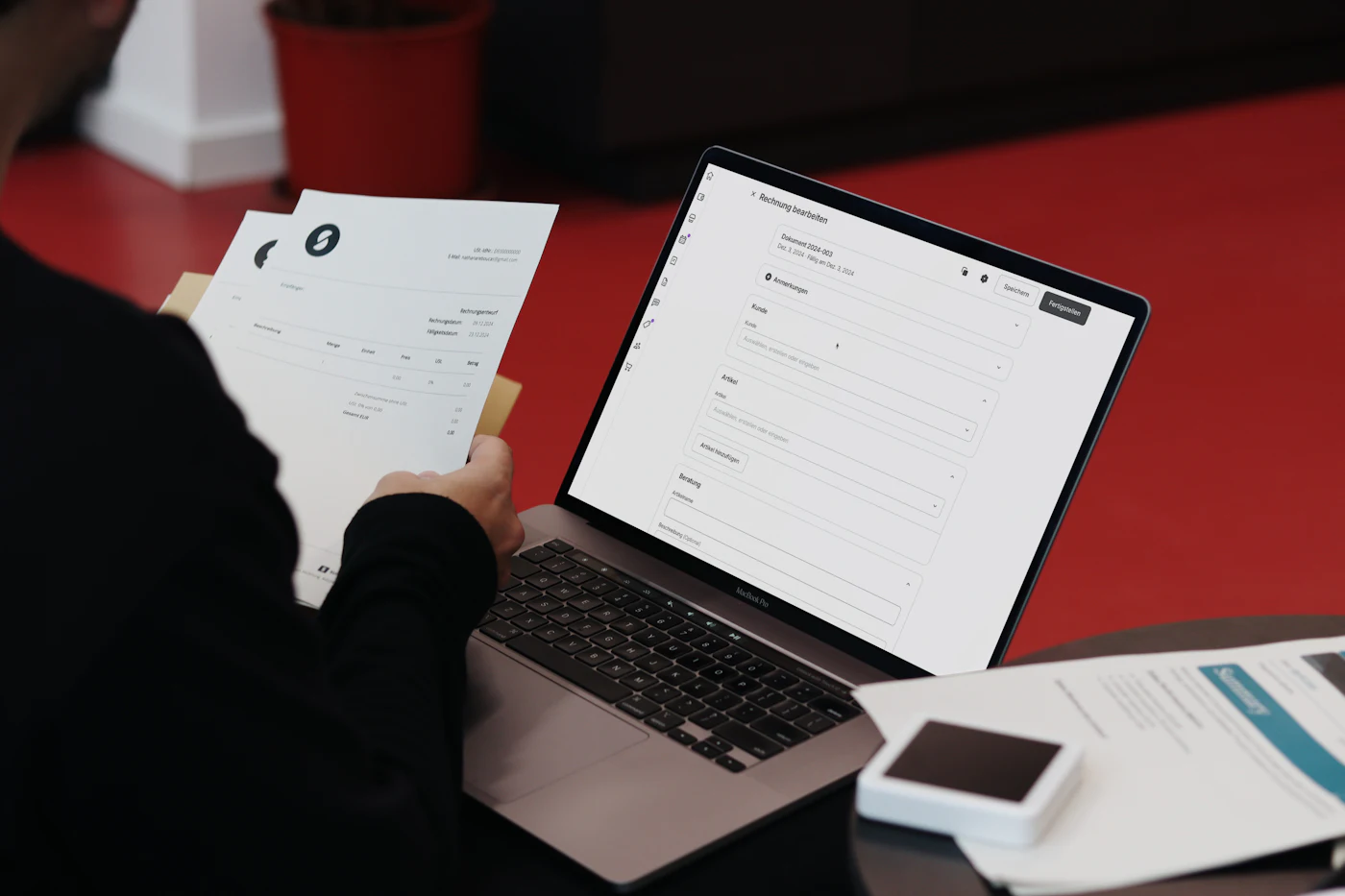
Photo: SumUp on Unsplash.
Awareness stage
Keep exploring with a practical guide
If you are still mapping the problem, we help you move from concepts to an actionable plan for your company.
Frequently asked questions about Verifactu
What is Verifactu?
It is Spain's set of requirements for invoicing software (Royal Decree 1007/2023), which requires invoice records to be complete, traceable and unalterable and, in VERI*FACTU mode, sent automatically to the Tax Agency.
When will Verifactu be mandatory?
The current date was 1 January 2027 for companies and 1 July 2027 for others. On 5 October 2026 the Ministry of Finance announced it plans to postpone it until October 2028; the regulation approving it is still pending.
Does it affect the self-employed?
Yes, self-employed people who invoice with software. Those already in the SII are excluded.
If I use Holded, Sage or Odoo, do I need to do anything?
Confirm with your provider that the software will be compliant and in which mode, and check that connections to your online store or other applications keep working.
What if my invoicing software is custom-built?
It must be adapted to the regulation's requirements or connected to compliant invoicing software. Efiprox does both.